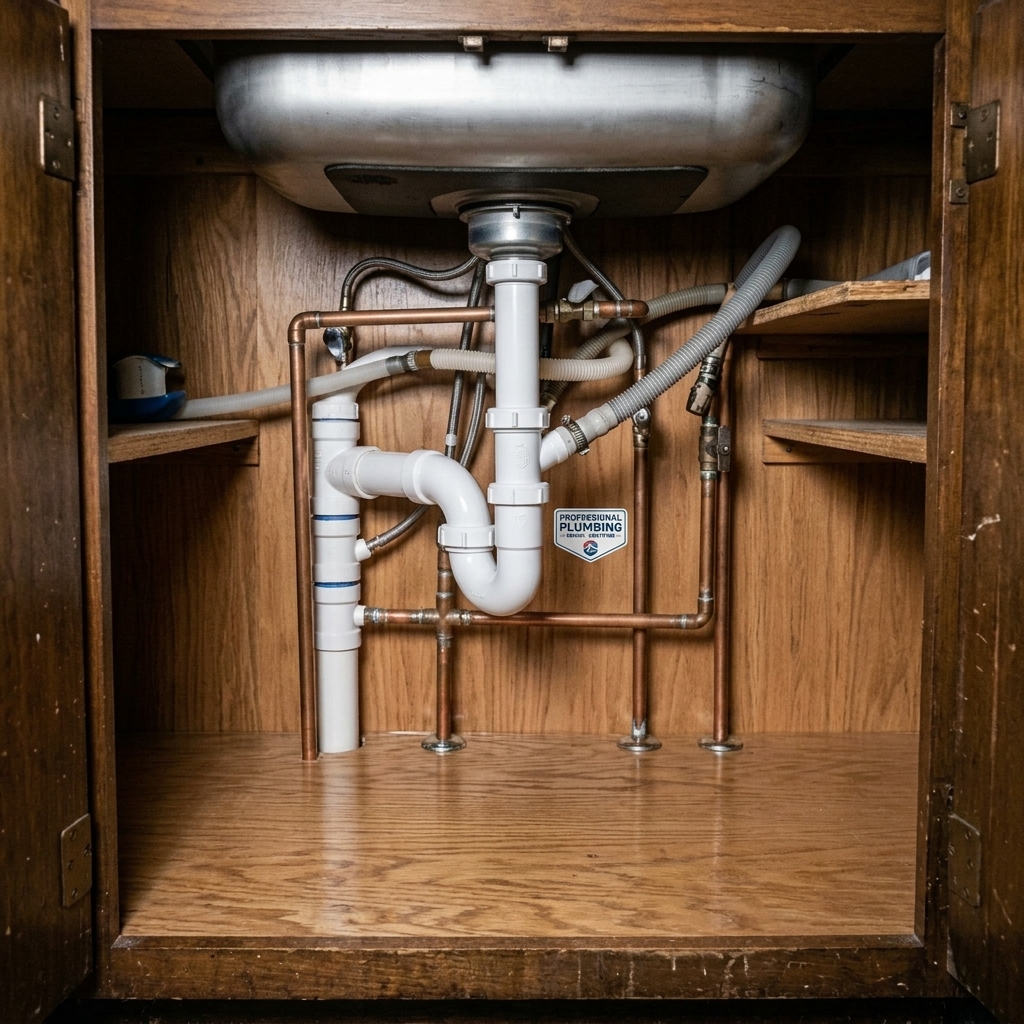
The space under the kitchen sink is often a dark, forgotten cabinet where we store cleaning supplies and trash bins. However, it houses one of the most critical plumbing junctions in your entire home. A small, undetected leak here can lead to ruined cabinets, mold growth, and expensive structural damage.
1. The "Slow Drip" and Moldy Odor
Many plumbing leaks under the sink don't spray water; instead, they slowly drip from loose connection joints or hairline cracks in the PVC drain pipes. If you notice a damp smell when you open the cabinet door, or see warped wood at the base of the cabinet, it is time for a thorough inspection. Placing a dry paper towel under the joints and running water can help you pinpoint active leaks instantly.
2. White Chalky Buildup or Rust on Shut-off Valves
Take a look at your hot and cold water shut-off valves. If you see a white, green, or chalky mineral deposit (known as efflorescence) or signs of rust around the compression joints, the valve seals are beginning to fail. Corrosion eats away at metal connections, making them brittle. Attempting to turn a corroded valve in an emergency can cause it to break entirely, leading to a major flooding event.
3. Slow Draining or Deteriorating P-Traps
The P-trap (the curved section of pipe under the sink) is designed to hold water to block sewer gases from entering your kitchen. However, organic buildup and harsh chemical drain cleaners can corrode metal traps or degrade PVC seal rings over time. If your sink drains slowly despite snaking, or if you see grease-laden moisture weeping through the curved joints, the trap assembly requires replacement.
Keep Your Plumbing Flawless
Don't wait for a leak to become an emergency. Book a vetted, professional Helpero plumber to inspect, repair, or replace your under-sink pipes today.
Explore Plumbing Services