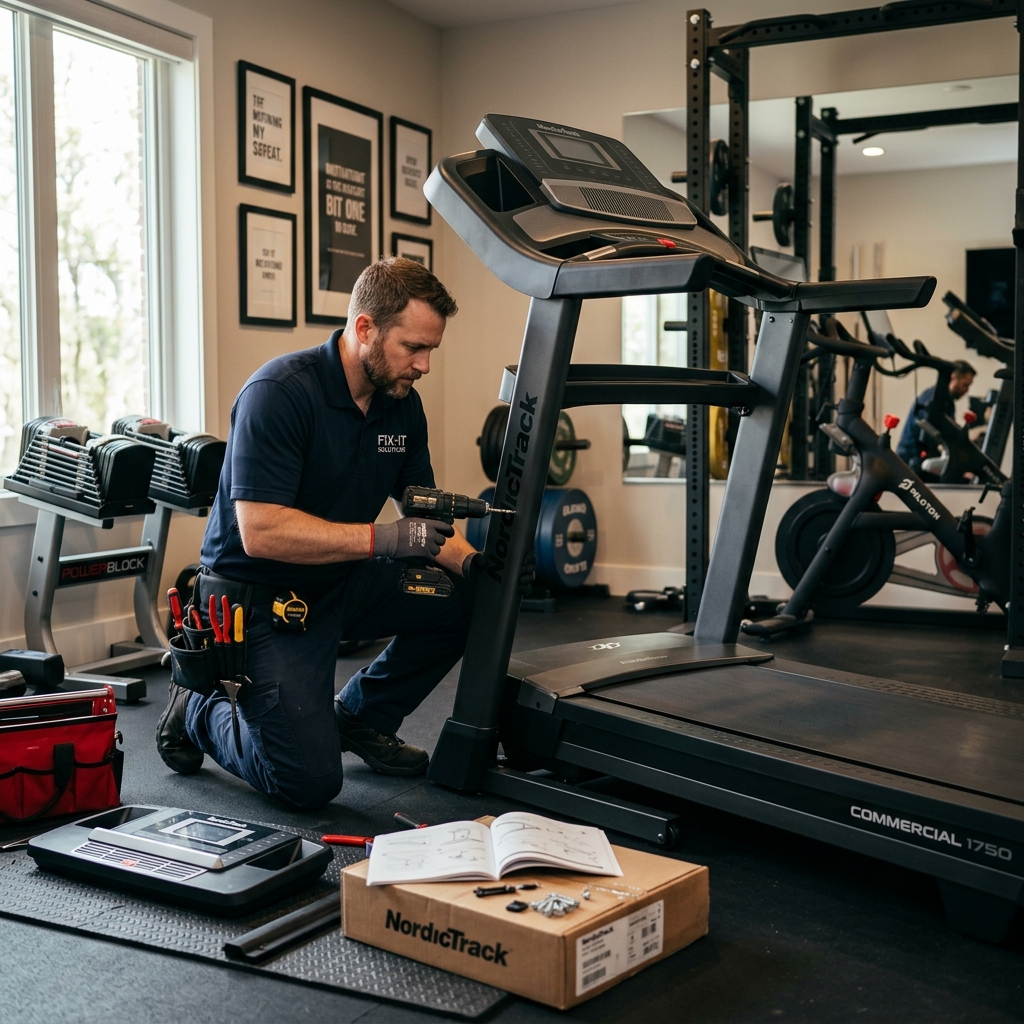
Creating a home gym in your basement or spare bedroom is a fantastic way to stay active, but bringing fitness equipment home is only the first step. Assembling treadmills, ellipticals, power cages, and weight benches involves heavy parts, complex cabling, and strict safety specifications. A loose bolt on a fitness machine can lead to severe injury during use.
1. Protecting Your Floors and Planning Space
Fitness gear is incredibly heavy. Heavy treadmills and weights can easily dent hardwood floors or tear carpets. Laying down high-density EVA foam tiles or a rubber matting foundation protects your floor surface, absorbs vibrations, and dampens noise, which is especially important if you live in a condo or apartment.
2. Elliptical and Treadmill Cable Routing
Motorized fitness machines contain internal wiring harnesses that route power from the base to the display console. When assembling the steel uprights, it is incredibly easy to pinch or cut these cables, causing electrical shorts or console failures. Laying out wires with guide cords and routing them patiently is critical during the initial assembly phase.
3. Double-Checking Structural Bolts and Lubrication
Safety is paramount for weight benches and power racks. Every bolt must be tightened to specific torque settings, and nylon-insert lock nuts (nyloc nuts) should be used to prevent bolts from backing out due to vibrations. Additionally, lubricating guide rods on weight stacks and oiling treadmill belts ensures quiet, smooth operation and extends the life of the machine.
Safe, Secure Gym Assembly
Don't risk injury with poorly assembled fitness gear. Book a vetted, professional Helpero assembly specialist to build and test your home gym equipment safely.
Explore Assembly Services