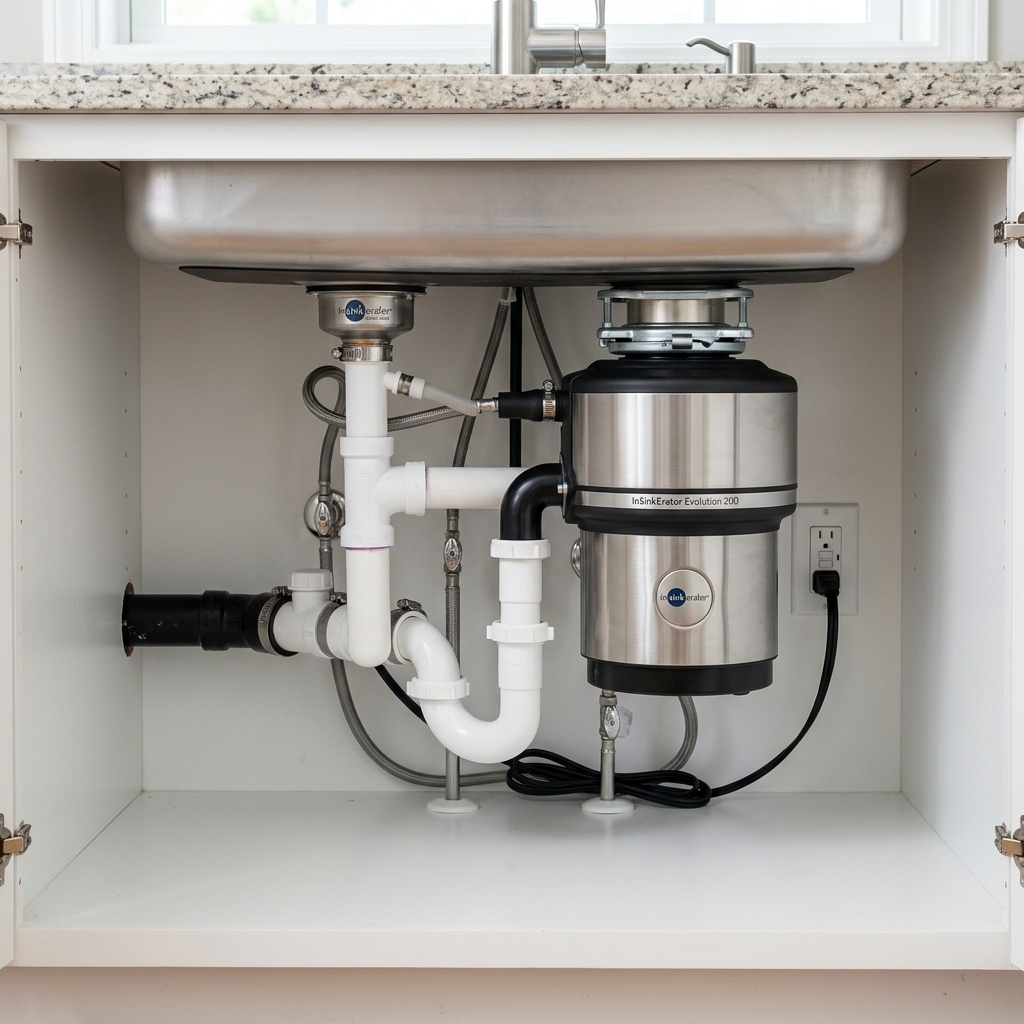
A garbage disposal is a incredibly convenient kitchen appliance, but it is not a trash can. Misusing your disposal can lead to jammed blades, motor burnouts, and major kitchen sink backups that require emergency plumbing repairs. Understanding how your disposal works is key to keeping it running smoothly.
1. The "Forbidden Food" List
Certain items should never go down your disposal. Fibrous vegetables (like celery, onion skins, and corn husks) can wrap around the blades and jam the motor. Starchy items (like potato peels, rice, and pasta) swell in water and create a thick paste that easily clogs the P-trap. Most importantly, never pour cooking oil, grease, or fat down the drain, as they solidify inside your cold pipes.
2. Use Cold Water, Not Hot Water
Always run strong cold water before, during, and for 15 seconds after turning on your disposal. Cold water keeps any fats or greases solid, allowing the impellers to chop them up and wash them down the line. Hot water melts greases, allowing them to coat your pipes and create sticky traps that cause blockages downstream.
3. Natural Cleaning and Deodorizing Hacks
If your disposal begins to smell, do not use harsh chemical cleaners, which can corrode the internal metal components. Instead, grind a handful of ice cubes and lemon peels. The ice scrubs the impellers clean of food particles, while the citrus peel oils release a fresh aroma. Baking soda and vinegar also work wonders for neutralizing odors.
Disposal Jammed or Leaking?
If your kitchen disposal is humming but not spinning, leaking from the bottom casing, or clogged, book a professional Helpero plumbing specialist to resolve it safely.
Explore Plumbing Services